

Kitaplarının arasında bir 'dünya' biriktiriyor
Diyarbakır’da yaşayan öğretmen ve sanatçı Bahoz Sardunya, çocukluk yıllarında kitap aralarında başlattığı çiçek kurutma tutkusunu, eşi Ayşe Suna Damlayıcı
By Shahab Vali
Newroz is a cultural ritual for all Iranian peoples that symbolizes the arrival of spring and a new day, but for Kurds, this festival/ritual is a timeless bridge connecting the past, present, and future. It is a matter of 'existence' and 'revival,' a repetition of the 'golden age.'
I believe there is no Kurd who does not know the story of Newroz. Or who does not celebrate the Newroz Festival. Of course, each Kurd may celebrate this festival differently according to their beliefs and views. But what matters is that all Kurds recognize and celebrate the Newroz Festival. But what is Newroz? As a festival, from which geography does it originate and to which nation does it belong?
Without delving into the analysis and interpretation of the semantic, philosophical, and conceptual notion of time, it can be said that in the human subconscious, the concept of time always occupies two distinct categories: Sacred time and non-sacred or philosophical time. Sacred time, for humans, has different types: A time in which humans fulfill their needs related to faith (prayer, worship, etc.). And a time in which humans strive to become one with mythological archetypes like deities and ancient heroes by performing and repeating actions and behaviors attributed to them, or in other words, to return to their roots and origins. Generally, in such sacred times, humans perform rituals. And finally, times that symbolize and commemorate cosmic rhythms, which can be monthly, seasonal, or annual. Such times also have special sacred ceremonies/festivals and are considered eternal. Performing such ceremonies fulfilled another desire: Celebrating such festivals, with special rituals, at the right time, allowed humans to escape from the non-sacred past and at the same time leave behind their personal and social mistakes and start a new day and a new era.
For Kurds, among these rhythmic sacred times, the most important is Newroz, which follows the 'annual' cosmic rhythm. And it can be considered the most important Kurdish festival. Because above all, Newroz is for Kurds the narrative of the legitimacy of 'existence.' It is the narrative of their founding event that tells of their golden age.
Research on the origin of Newroz and its geography shows that:
In works from Iran's Islamic period, Newroz is also a widespread theme. For instance, Omar Khayyam wrote a monograph on the roots, importance, and rituals of Newroz called 'Nowruznameh.'
Today, the Newroz festival still preserves its vitality in Iran, among all ethnicities that inhabit the entire Iranian geography, and is celebrated as the most important and official festival of that culture. Before Newroz day, the last Wednesday of the year, 'Chaharshanbe Suri,' is celebrated. Special rituals are performed on Tuesday evening. Fires are lit in streets, alleys, or gardens, and everyone jumps over the fire while reciting poems: "May my yellowness be yours, may your redness be mine."
In Iran, the beginning of the year/new day, the first day of Farvardin (the first month of the year according to the Iranian calendar, which corresponds to March 21) is calculated to the minute and second. At the exact second when the year 'becomes new,' all family members gather around the Newroz spread called 'Haft Sin' (Seven things whose names begin with the letter 'S') and congratulate each other on the new year. The origin and history of the emergence of the 'Haft Sin' spread is not known. It appears that the oldest writing in which the 'Haft Sin' spread is mentioned is the divan of Bahauddin Khujandi (8-9th century AH). In Khujandi's divan, these 'seven things' are identified as: 'well-watered greenery (sabze-ye sirab), hyacinth (sonbol), lily (susan), cypress (sarv), jasmine (saman), wine cup (saghar), and cupbearer (saqi).' But today, the 'Haft Sin' spread consists of "hyacinth (sonbol), apple (sib), garlic (sir), sumac (somagh), sprouted wheat (sabzeh), vinegar (serkeh), and wild olive (senjed)." But it should be said that other things that begin with the letter 'S' can also be on this spread. Also, on the 'Haft Sin' spread, mirrors, painted eggs, rice and other legumes (as symbols of abundance), the Quran, and the divan of Hafez of Shiraz are placed. When the new year begins, Iranians often read a ghazal from Hafez of Shiraz at the Haft Sin spread to know how the new year will pass.
The Newroz festival, still today, continues for thirteen days in Iran, and all official institutions, schools, and universities are closed. The first twelve days of the new year are celebrated. Each day essentially represents one of the twelve months, each consisting of thirty days. This makes three hundred and sixty-five days. During these twelve days, family elders are visited, and celebrations are always held.
But a year consists of three hundred and sixty-five days. The thirteenth day of the first month of the year represents these 'five days' of the Primordial Chaos before Creation, according to Iranian mythology. Therefore, on the thirteenth day, everyone leaves their homes and cities. Around the city, in gardens and summer pastures, they enjoy themselves. The sprouted wheat is thrown into flowing water. This thirteenth day is called "Sizdah Be-dar" (going out).
But certainly, like all rituals, a myth is also necessary for the Newroz ritual. According to Iranian mythology, Newroz emerged during the era of Jamshid, son of Tahmures, who in the Avesta is described as the king of the virtuous city and one of the 'immortals' and one of the mythological heroes of the Indo-Iranian peoples. According to Iranian tradition:
"Jamshid possessed all power, splendor, and victory, and the light of the sun embraced his crown and throne. This victory gave him honor and glory. Because of this, he tried to rise even higher than his position. He had a throne built and adorned it with precious stones. At his command, demons lifted the throne from the ground and elevated it toward the celestial canopy. That day is designated as the 'new day,' or 'Newroz'."
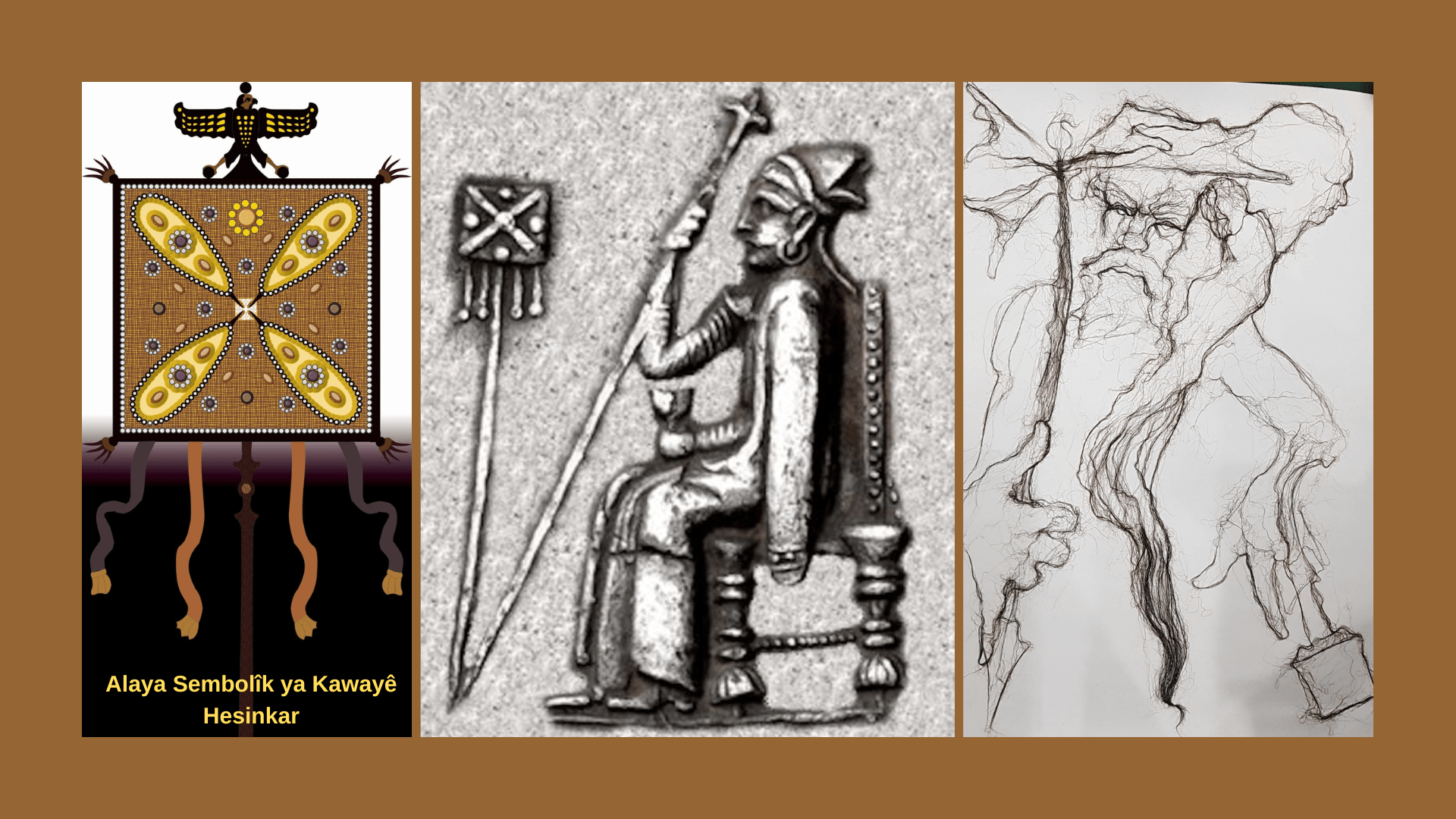
But for Kurds, the matter is a bit different. In Kurdish narration, the Newroz festival and its related rituals reach another myth, namely the story of Kawa the Blacksmith and Zahhak/Dahhak, which can be considered the founding myth of the Kurds. According to tradition:
"One day Zahhak/Dahhak, the tyrannical king, brought all the nobles of the country together and asked them to say that Zahhak had done nothing but good, had said nothing but words of truth, and had never stood against justice. Out of fear of the king, all the nobles of the country agreed to this declar


In this special Botan Times episode, we take an in-depth look at the mission, history, and work of the


In this comprehensive and inspiring interview on Botan Times, we sit down with internationally acclaimed researcher and academic Dr. Pawan

In this in-depth interview on Botan Times, renowned Dutch philosopher and linguist Dr. Michiel Leezenberg (University of Amsterdam) discusses

DIYARBAKIR — The Avesta Cultural Foundation has announced that its inaugural Honor Award will be presented to the distinguished historian and

Tu eposteya xwe binivîsî em ê ji te re bûltenan belaşî bişînin...